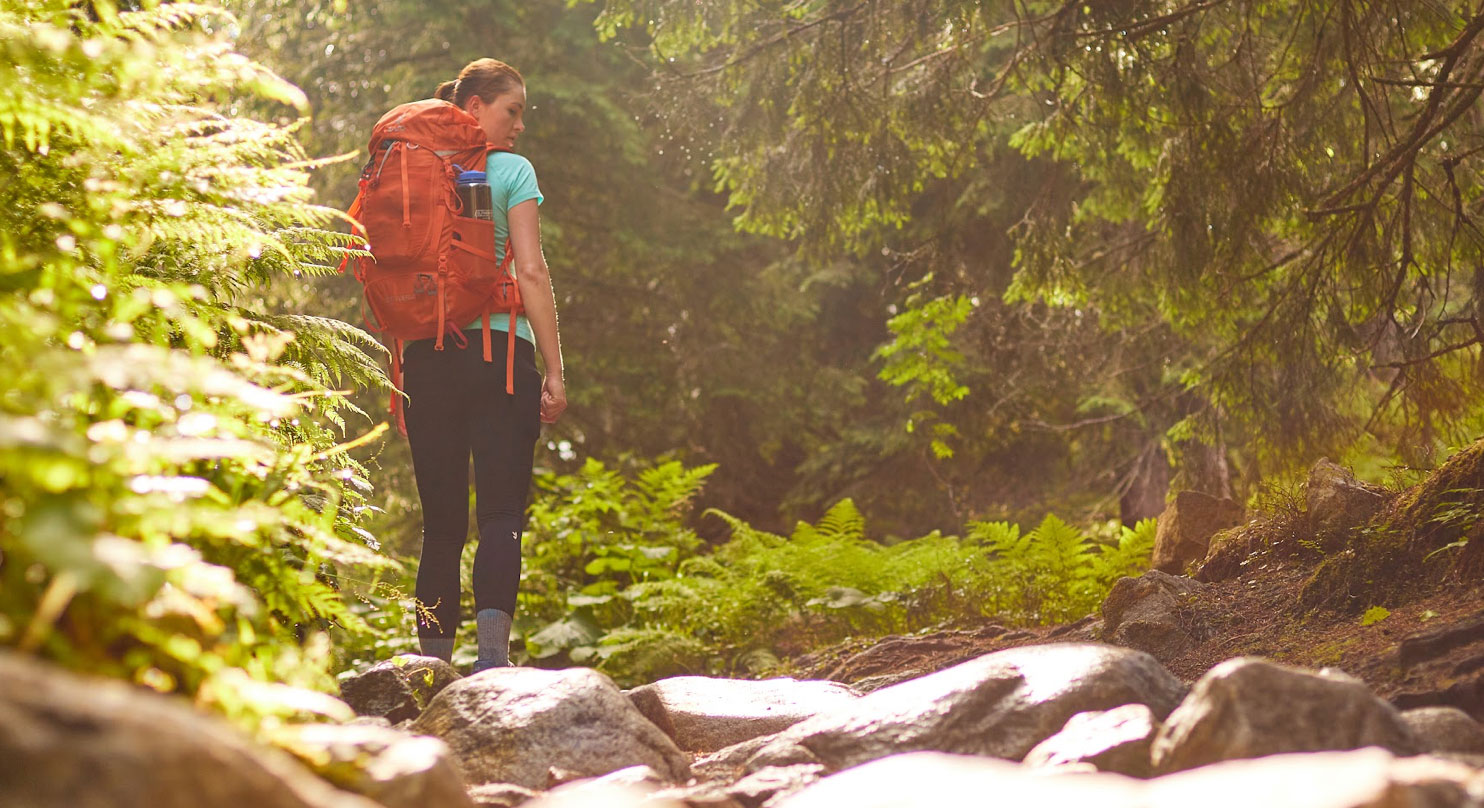
Leave nature as you found it: 7 principles of the "Leave No Trace" initiative
The Leave No Trace Center for Outdoor Ethics is an organization that has been involved in nature conservation and education in the field for many years. There are, of course, several such organizations around the world, but the 7 principles of responsible behavior in nature that this organization has published at the time have become a kind of global manifesto of how to behave in nature so that our impact on it is as small or almost zero.

Nowadays, when the interest in hiking and nature is greater than ever before, which is a positive thing in itself, these principles, their adoption and their knowledge are even more important than ever before. It is a great positive that new and new people are finding their way into nature, but unless we all approach it responsibly, we will feel the impact of this increased interest in the long term. Whether we are talking about the amount of garbage, influencing wildlife habits, erosion of hiking trails or pollution of water.
Of course, probably no one goes to nature to harm it in a targeted way, but often it is the overlooked and unconscious mistakes that cause these negative effects. And that's why the 7 principles of "Leave No Trace" are so important. Let's look at them one by one:
1. Thorough planning and preparation
Before each hike, it is crucial to plan it properly and prepare thoroughly. Deficiencies in these areas can lead to problems and problems can lead to bad decisions. Therefore, it is important to pack adequate equipment, a sufficient amount of food and prepare for possible weather fluctuations, whether we are talking about storms or extreme heat. When planning a hike, it is good to know the rules in the area, whether we are talking about the free movement of dogs, the possibility of starting a fire and so on.
2. Camp only on a durable surface
When choosing a place to spend the night, we should focus on a solid surface. Ideally, we are talking about areas that are set for camping, in other cases we are talking about solid surfaces such as rocks, dry grass or snow.
Our camp should be as small as possible, should not interfere with vegetation and should be at least 60 meters away from water sources.

3. We take waste with us
What we take into nature, we should take from it. Every package, every napkin, all the waste belongs in the backpack. It is ideal to use non-disposable packaging for food.
A special case is the toilet. Such a need, if necessary, should be made at least 60 meters from sources of water, campsites and hiking trails. We should make it to a 15-20 centimeter deep pit and cover the pit when job is done. We should use toilet paper as little as possible and bury it in this pit or take it with us in a plastic bag. An alternative is to use "natural toilet paper" such as burdock.
As for washing, whether for yourself or dishes, for example, we should do it again at least 60 meters from the water source, bring this water from there and use soap that is biodegradable.
4. We minimize damage after the campfire
It is naturally okay to use fireplaces if it is not forbidden in the given locality, and many of us cannot even imagine the hike without it. The problem is that campfires often cause the most damage to the environment around us.
Therefore, the fire should be as small as possible, let's not use large pieces of wood, but only smaller mallets, with which we have better control over the size of the flame. All the wood we burn should then be burned to ashes. Let's not use lighters, gasoline and similar sources that can speed up the start of a fire, but they can be harmful to the fauna and flora around us.
An excellent alternative to campfires are compact cookers, which are light, efficient and we have full control over the flame.

5. We do not take anything home
If we are interested in an object, stone or plant, we can take a picture of it, but under no circumstances do we take it home. We should not touch these objects, especially but not only the living ones. We also do not build any bunkers or other shelters from pieces of wood and trees.
6. We respect wildlife
Despite the fact that the wildlife has lost its shyness in several cases, we should still treat it with great respect. We do not approach animals, not only in the interest of our own safety, but also in the interest of respect for the wild.
We observe the wildlife from a sufficient distance, without noise and no effort to approach. Under no circumstances do we feed the animals - we can harm them, affect their natural behavior and thus theoretically expose them to predators or other dangers. At the same time, we also indirectly protect them by not leaving food behind and taking all the waste with us.
7. We respect other visitors
Treat others the way you want them to treat you. This cliché applies in the mountains as elsewhere. Respect the people around you, no matter what. If you need a break, take it next to the hiking trail. Don't be noisy, let nature itself be the noisiest element in nature. And if you have an animal with you (probably a dog), keep it under control at all times.